Shop · Production Tooling, Jigs & Fixtures
DUT / Pogo Test Fixture
Every pin makes contact — the flatness is computed, not hoped for.
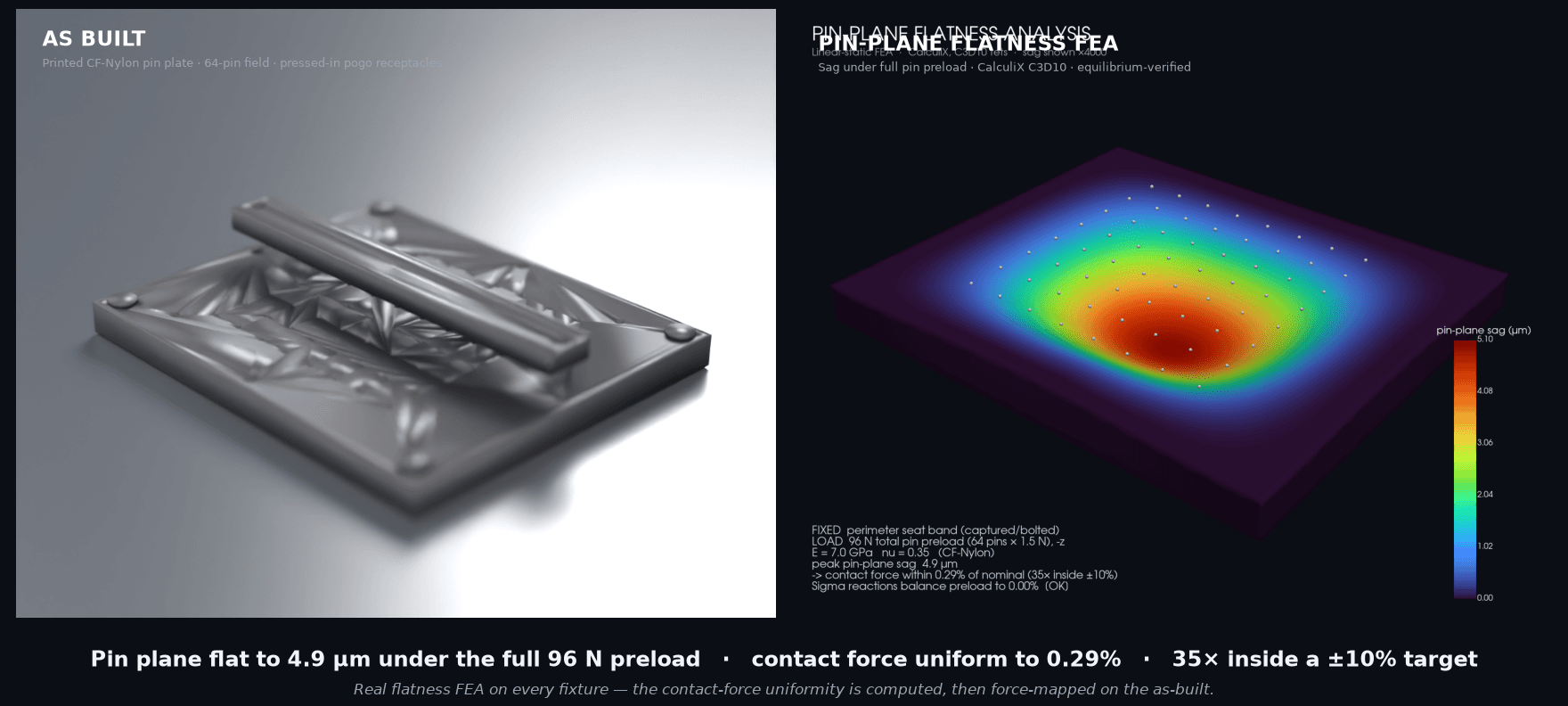
Σ reactions balance the 96 N pin preload to 0.00%, and the FEA flatness (4.9 µm) falls between two independent plate-bending hand-calcs — so the mesh is provably valid and the number is bracketed. That 4.9 µm of sag is 0.3% of contact force, 35× inside a ±10% uniformity target. Every pin stays in its reliable-contact band.
How we engineered this: keeping 64 pins in contact under load →
Specifications
| Pin-plane flatness | 4.9 µm under the full 96 N pin preload |
|---|---|
| Contact-force uniformity | 0.29% of nominal — 35× inside a ±10% target |
| Pin field | 64 pins (8×8 @ 10 mm); configurable to your DUT map |
| Strength margin | 259× (a fixture fails by flexing, not breaking) |
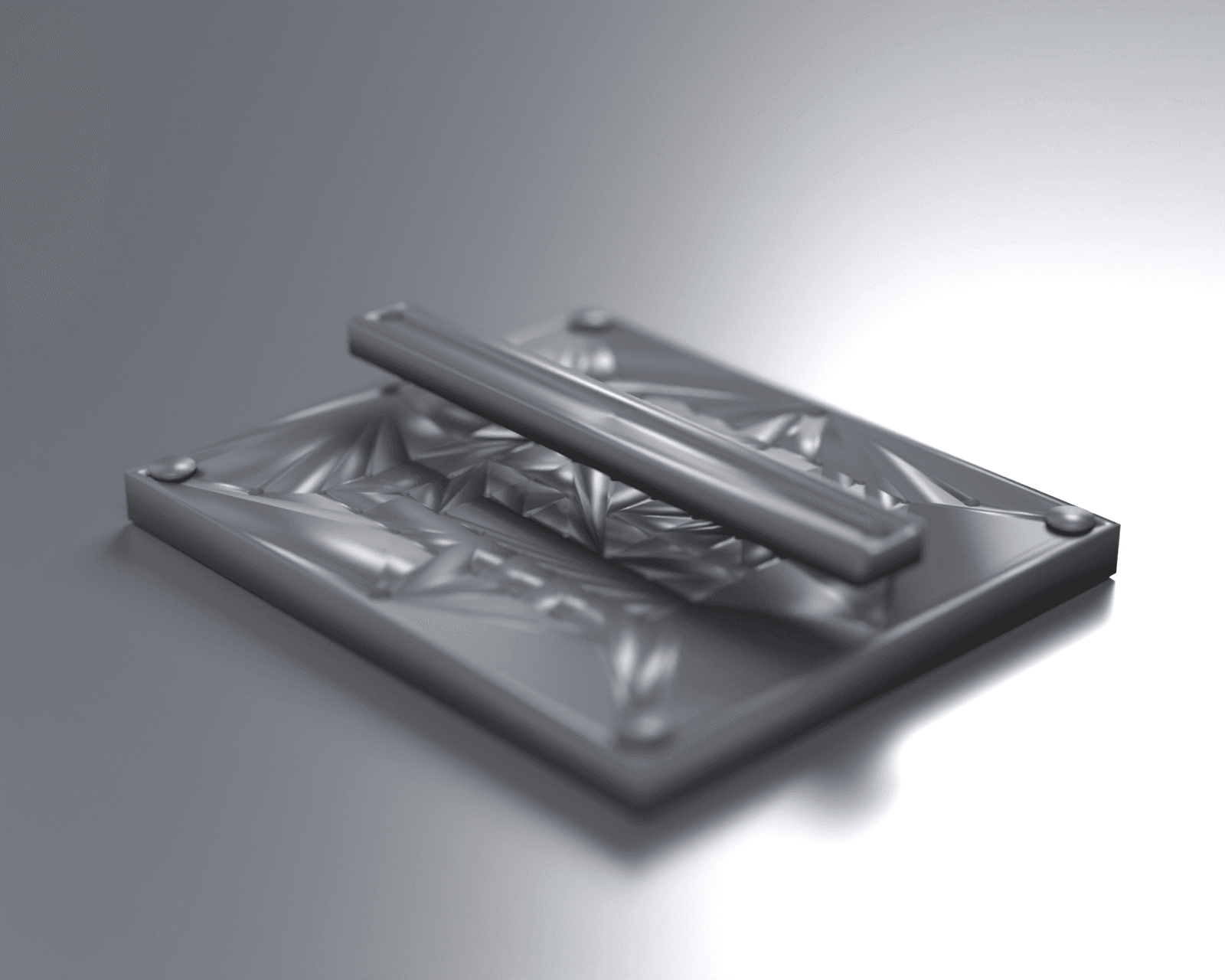
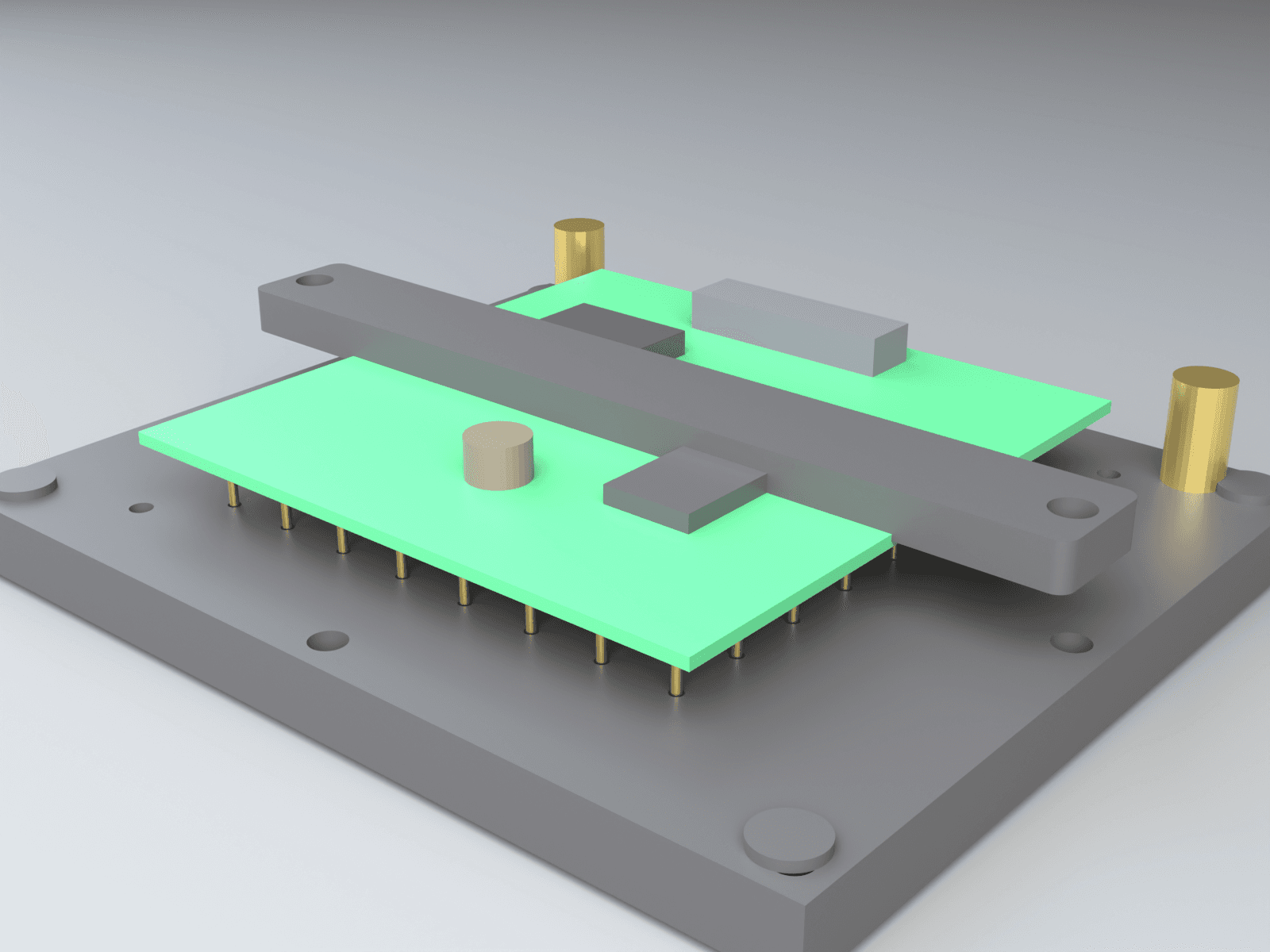
| Assembly | Probe plate + 4 DUT standoffs (set 1.7 mm pin stroke) + removable hold-down bar |
| Probes | INGUN KS-100 spring-probe receptacles (Ø1.70 mm reamed press fit) |
| Locating | Two dowel pins + the receptacle field |
| Material | CF-Nylon plate (rigidity), steel receptacles |
| Analysis | CalculiX C3D10 FEA, Roark-bracketed, equilibrium-verified |
Application and configuration notes
The stiffness model uses the solid plate (the Ø1.70 mm pin holes are ~1.4% of area, non-structural). Standard CF-Nylon is NOT ESD-controlled — for live/powered boards we spec an ESD-safe PA/PEKK grade (10⁶–10⁹ Ω/sq) plus a grounding stud; the standard grade is scoped to unpowered boards. Flatness scales with pin count and span — the configurator re-solves each layout, and for a very large field we add a center support or step the thickness. The FEA is the design; an on-fixture contact-force map on the as-built is the deliverable.
Configure to your part
Enter the envelope of the part you need to inspect. We auto-size the 3-2-1 fixture, then run the real FEA to confirm the datum holds before you pay.
Estimate only — every fixture is FEA-validated for datum stability and quoted before work begins.
In use
The part
A bed-of-nails test fixture: a CF-Nylon plate carrying an array of spring-loaded pogo pins that contact a circuit board under test. The board is pressed down onto the pin field; each pin reports a node back to the tester. It's the workhorse of electrical functional test and in-circuit test, and it's a real paid market — commercial DUT/pogo fixtures run $1,000–$7,000.
The thing that makes or breaks one is contact. The summed spring force of a whole pin field — 96 N across 64 pins here — tries to bow the plate. If it bows, the pins near the center compress less than the pins at the edges, their contact force drops, and an under-pressed pin reads as a false open. So a failed test might be a bad board, or it might just be a fixture that flexed. We don't leave that to chance: every fixture ships with the FEA showing the pin plane stays flat under the full preload.
Under the full 64-pin preload this plate holds its pin plane flat to 4.9 µm — so the worst pin's contact force is within 0.3% of nominal, 35× inside a ±10% target. The pressed-in steel receptacles take the contact and the wear; the printed plate only has to hold the plane, which is exactly what we compute. Parametric on the pin map, so the layout configures to your board and re-solves the flatness for that exact field.